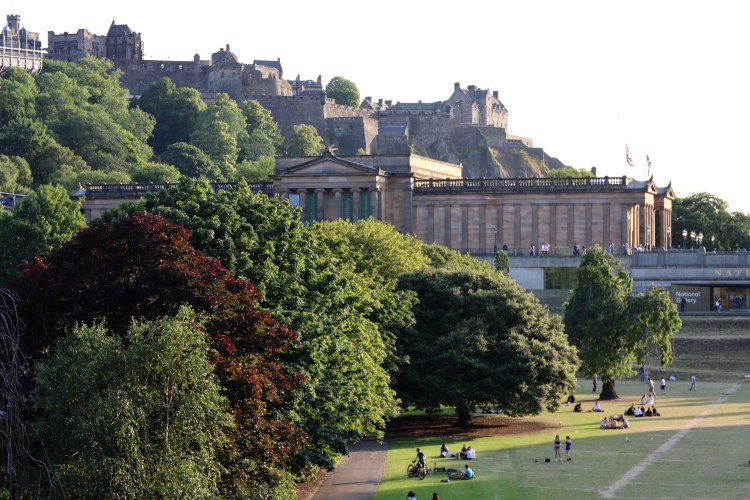
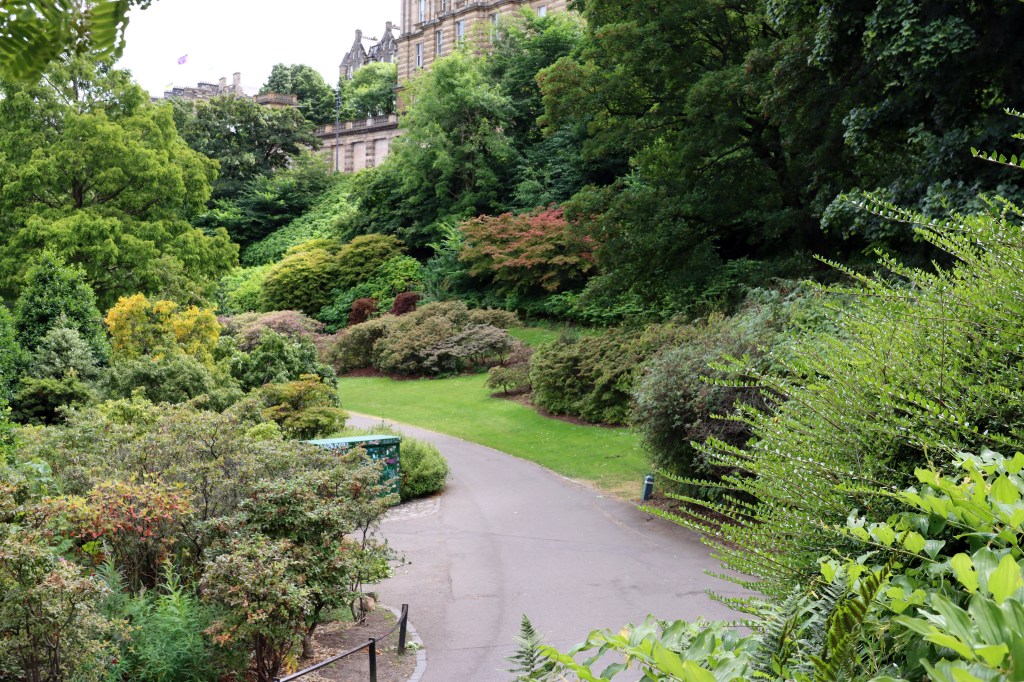
Resting beneath the historic Edinburgh Castle, Princes Street Gardens unfolds like a green canvas.
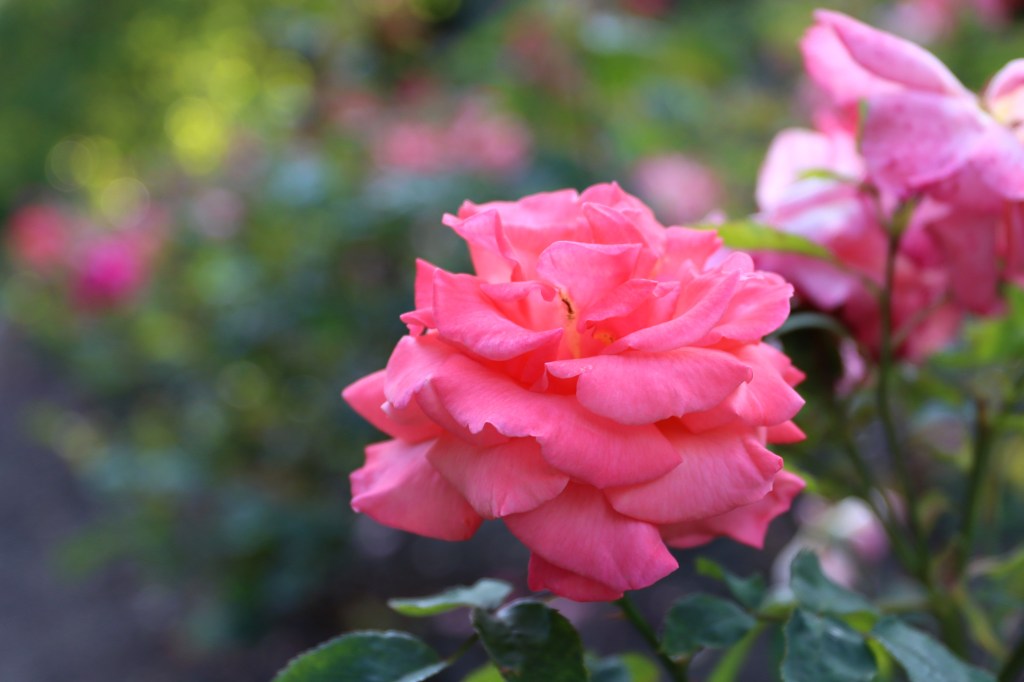
If you go for a stroll through the gardens, you’ll find vibrant foliage all year-round – cherry blossoms in spring, roses in summer, vibrant maple leaves in the fall, and evergreens in the winter.
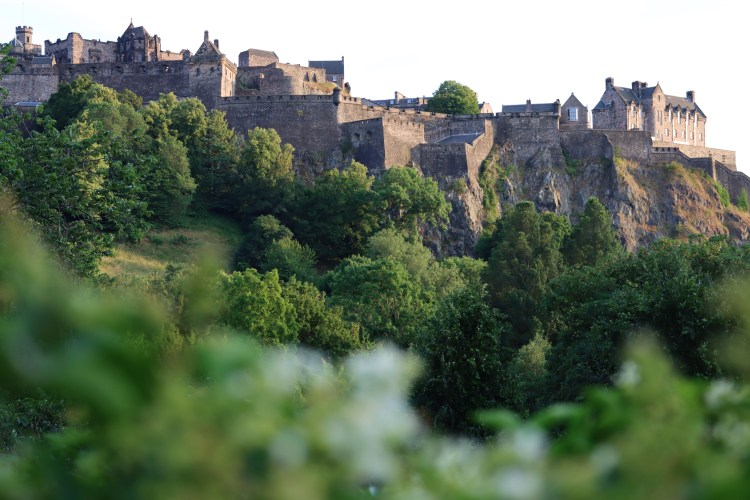
The park is located between Old and New Town and is one of the best places from which you can get stunning Edinburgh Castle views, as it sits right below the massive rock face of the castle, giving you a dramatic upward perspective.
It is also a place where you can find hidden kirkyards, historic monuments, playgrounds, seasonal events, and plenty of spots to simply sit with an ice cream and soak up the atmosphere. Whenever I visit Edinburgh, I bring a lunch and watch the bustle of the city pass me by.
But did you know that originally these gardens used to be a stinking marsh, called the Nor’ Loch?
It all started in the 1460s, when King James III ordered the valley to be flooded to make it into a defensive moat and barrier for Edinburgh Castle and the city’s northern side.
Over the centuries, it turned into a stinking sewer because of how Edinburgh city grew.
Read More: Some of the Best Free Museums & Galleries You Should Visit While in Edinburgh
The Nor’ Loch: Origins and Grim History
Back in a day, Edinburgh had a very limited sanitation system; therefore, all waste – slaughterhouse refuse, household waste, human waste and even dead animals-all ended up in the Nor’ Loch, creating a foul-smelling reservoir of filth and earning it an unpleasant reputation.
What’s more, when in the sixteenth century witchcraft trials became popular in the city, a common way of testing whether suspects were actually witches was by dropping them in a body of water: if they floated, they were guilty.
While in Scotland this technique was not widely used, there are stories that some suspected witches were dunked in the Nor’ Loch, but the trial was abandoned because the Loch was so clogged up with the waste that it was very difficult to get anything at all to sink in it, let alone people.
When Edinburgh’s New Town expanded, the toxic marshland became a severe health hazard.
The draining of Nor’ Loch, during which, I might add, workers discovered numerous human bones and skeletons, began in stages in the late 18th century to allow construction of the North Bridge and was successfully transformed into the lush Princes Street Gardens public park we know it now.
Read More: Your Guide to Visiting Calton Hill in Edinburgh | Everything You Need To Know
Exploring Edinburgh’s Princes Street Gardens
Princes Street Gardens, now a World Heritage Site, are divided into two sections separated by The Mound, the artificial hill that connects the Old and New Towns and now houses the Scottish National Gallery.
These sections are named East Princes Street Gardens and West Princes Street Gardens, respectively.
The eastern side, located next to Edinburgh Waverley Train Station, spans approximately 8.5 acres and has long served as a public park.
The larger western end, covering 29 acres, officially became a public park in 1876, but this was met with fierce opposition from the local residents of the area, who were using the green space as their private recreational zone that was only open to the public on Christmas, New Year’s Day and one other day every year.
Today, Princes Street Gardens as a whole are a beautiful green statement at the heart of Edinburgh.
But it’s not just gardens; it’s a place steeped in history, and like most of Edinburgh, it has its dark past.
Read More: The Book-lovers Guide to Edinburgh’s Bookshops: 12 Amazing Stores You Should Visit
Top Things To Do in Princes Street Gardens
The Princes Street Gardens is a great sightseeing stop and a place to slow down for an hour.
With free entry, 37 acres of green space, two cafés, world-class museums, and a stunning view of Edinburgh Castle, it makes it one of the most rewarding stops you can make in Edinburgh city.
Here are some of the best things to do in the gardens:
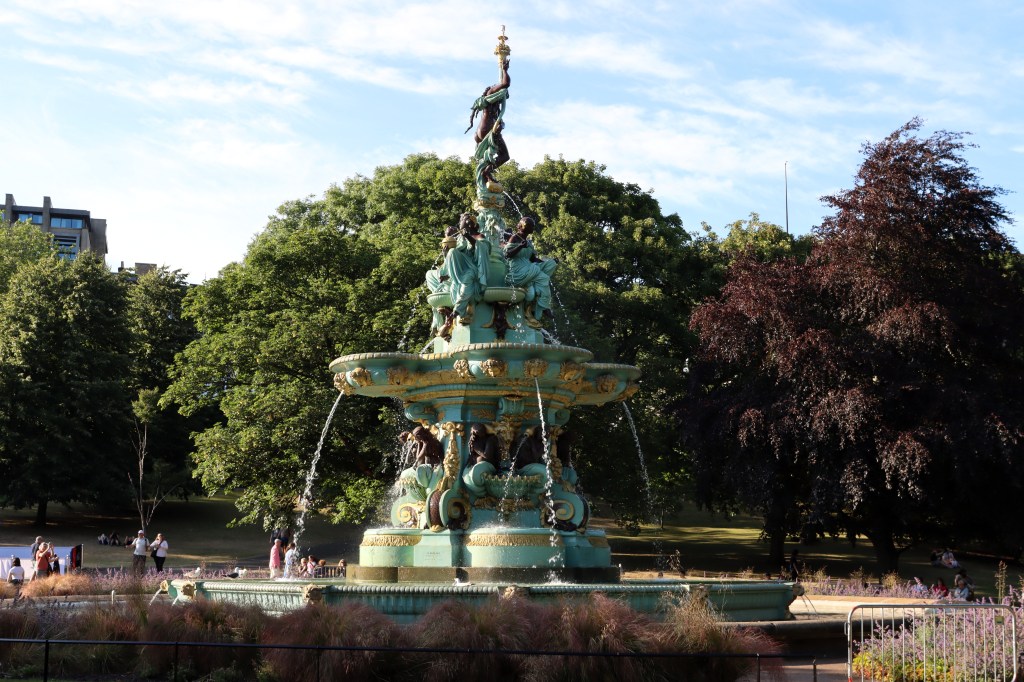
View & Photograph the beautiful Ross Fountain
Located in the heart of West Gardens, the ornate 19th-century fountain is one of the best postcard-worthy views in the city for photos with Edinburgh Castle in the background.
Jean-Baptiste Jules Klagmann created the fountain in France in the 1860s and showed it at the 1862 Great London Exhibition, where Daniel Ross noticed it.
He was so captivated by the fountain that he bought it and gifted it to Edinburgh.
Before the fountain was shipped to Edinburgh, it was split into 122 pieces and reassembled at Princes’ Street Gardens. The project took years, and unfortunately, Daniel Ross was unable to see the fountain finished. He died one year before the fountain was completed and opened to the public in 1872.
If you look closely, you can see sculptures of cherubs, lions, eight mermaids, and four female muses representing arts, science, poetry, and industry.
Read More: 11 Beautiful Hidden Gems in Edinburgh, Scotland, Even Locals Don’t Know
Climb the Scott Monument
Standing proudly in the East Princes Street Gardens is a striking memorial with dramatic spires dedicated to one of Scotland’s most beloved writers-Sir Walter Scott.
Soaring at 200 feet and 6 inches, it holds the world record as the largest monument to a writer, making it even bigger than the José Martí monument in Havana.
At the base of the monument, you can see a white marble statue of Sir Walter Scott himself, carved from a 30-ton block of Carrara marble by Sir John Steell. He’s depicted sitting with his loyal deerhound Maida by his side.
The inside of the monument isn’t just a hollow tower—it’s home to a cosy little museum where you can learn about his literary career and how the monument came to be.
There are 287 steps to the top of the Scott Monument, from where you can enjoy breathtaking views of Edinburgh and the surrounding countryside.
Read More: 10 Unforgettable Edinburgh Day Trip Ideas From a Former Local

After Sir Walter Scott died in 1832, the people of Edinburgh were determined to honour him in a way that matched the scale of his literary legacy.
The Binny sandstone used for construction was incredibly hard—great for enduring Edinburgh weather, but brutal for those who worked it.
Unfortunately, the stonemasons, who carved the tower’s ornate details, paid a high price.
The fine dust generated during the carving process led to widespread cases of silicosis, with nearly half the workforce succumbing to lung disease—a devastating reminder of the human effort involved in building monuments of this scale.
Read More: A Local’s Guide: Some Of The Best Things To See And Do In Edinburgh’s New Town

Stop by the Scottish National Gallery
Situated on The Mound between the two gardens, this gallery houses a significant collection of Scottish and international art.
If you wish to discover masterpieces by Rembrandt, Van Gogh, Turner, as well as the iconic Scottish Colourists, then you should stop by the Scottish National Gallery.
The gallery is located on the Mound right next to Princes Street Gardens; it would be easy to incorporate it into your daily Edinburgh itinerary.
I was astounded by the quality and the variety of the collection and delighted to see the showstopper paintings that draw visitors from far and wide – Monarch of the Glen by Sir Edwin Landseer, the eternal symbol of Scotland and the most reproduced of all 19th-century British paintings.
The painting of The 12-point stag set against a misty Highland was my favourite highlight, as well as Winter Landscape by Hendrick Avercamp.
- Address: The Mound, Edinburgh, EH2 2EL
- Opening Times: Open daily from 10:00 AM to 5:00 PM
- General Admission: Free entry
Read More: Top 11 Things To Do in Edinburgh This Autumn That Are Good For Your Soul

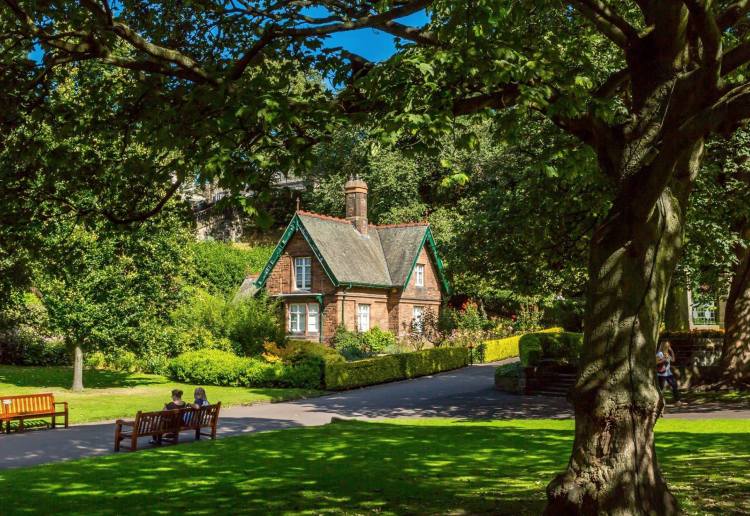
See the charming Gardiners Cottage
When the city council renovated the gardens in 1886, they built a lovely red stone cottage for the Head Gardener who used to maintain the gardens.
The historic cottage is set on the mound beneath the Floral Clock and beside the Garden of Remembrance.
Today, you can find a sign saying “Great Aunt Lizzie’s Cottage”, because it was featured in Teacup Travels, a CBeebies TV series.
No one lives here today, but it is private property, so you can only admire it from the outside over the hedgerows.
Read More: St. Conan’s Kirk: A Captivating Architectural Marvel on the Shore of Loch Awe
Explore Historical Statues and Monuments
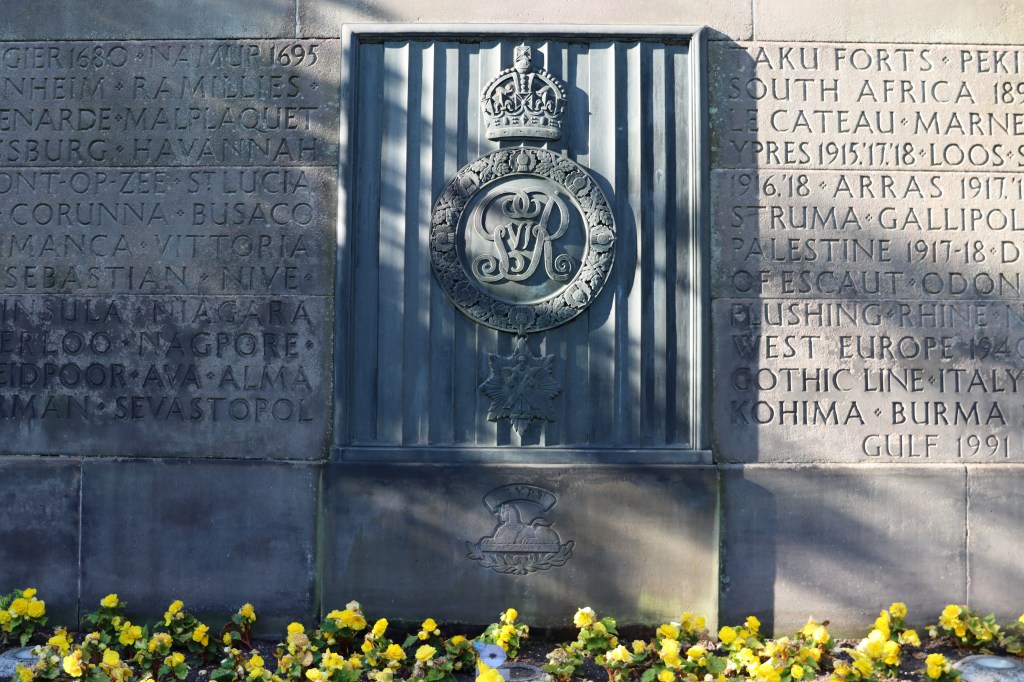
Within the park, you can also discover many various sculptures and monuments.
There are several historical statues dedicated to poet Allan Ramsay, explorer David Livingstone, publisher Adam Black, and the Scottish doctor James Simpson.
You will also find many war memorials such as:
- Wojtek the Soldier Bear Statue: A sculpture commemorating the famous bear that served with the Polish Army during World War II
- Royal Scots Greys Monument: A memorial that is dedicated to the famous cavalry regiment
- Royal Scots War Memorial: The sculpture honours members of the Royal Scots regiment who gave their lives in service
- Norwegian Memorial Stone: A tribute to Norwegian-Scottish wartime connections and service during the mid-century global conflict
Read More: Some of The Best Things To See At The National Museum of Scotland in Edinburgh
See the Floral Clock
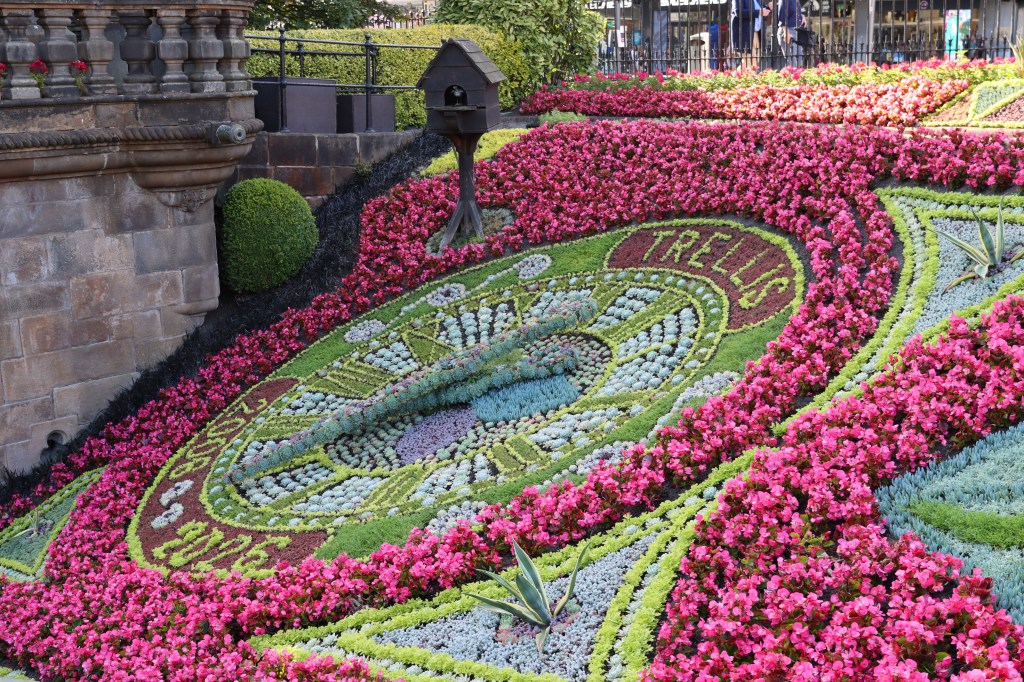
Another beloved feature of Princes Street Gardens is the Floral Clock, said to be the world’s oldest, made up of over 35,000 individual colourful flowers and plants across a 200-square-metre display, which change with the seasons.
John McHattie originally crafted the clock in 1903, using vibrant Lobelia, Pyrethrum, and other flowers.
It is a fully functioning clock featuring moving hands that keep accurate time. You can also listen for the cuckoo, which pops out to call every hour.
The floral clock is a delightful feature of the Gardens, and it is well worth a quick, free stop if you are already walking through the gardens.
I always stop by it because each year, it features a different theme that honours notable anniversaries, historical figures, local organisations, or charities.
*Good to know – the clock is in full bloom from June through late September or October, and is then dismantled for the winter
Read More: 8+ Incredible Reasons Why You Should Visit Edinburgh At Least Once
Enjoy Seasonal Events
Princes Street Gardens is also a place where many key festivals take place throughout the year.
- In winter, the East Gardens are transformed into a winter wonderland with festive lights and stalls, seasonal food, Santa’s Story, and amusement park rides. A large Ferris wheel that provides panoramic views of the city skyline is also present during festival seasons.
- In autumn, the annual Edinburgh Oktoberfest celebrations are held in the West Gardens. You can sample bratwurst, schnitzel and beer shipped from Bavaria.
- Edinburgh’s Hogmanay Celebrations, the largest event of the year, also take place in the gardens with live concerts and performances.
Read More: Your Guide to the Best Edinburgh Neighbourhoods Worth Exploring
Stop by St. Cuthbert’s Church and Graveyard
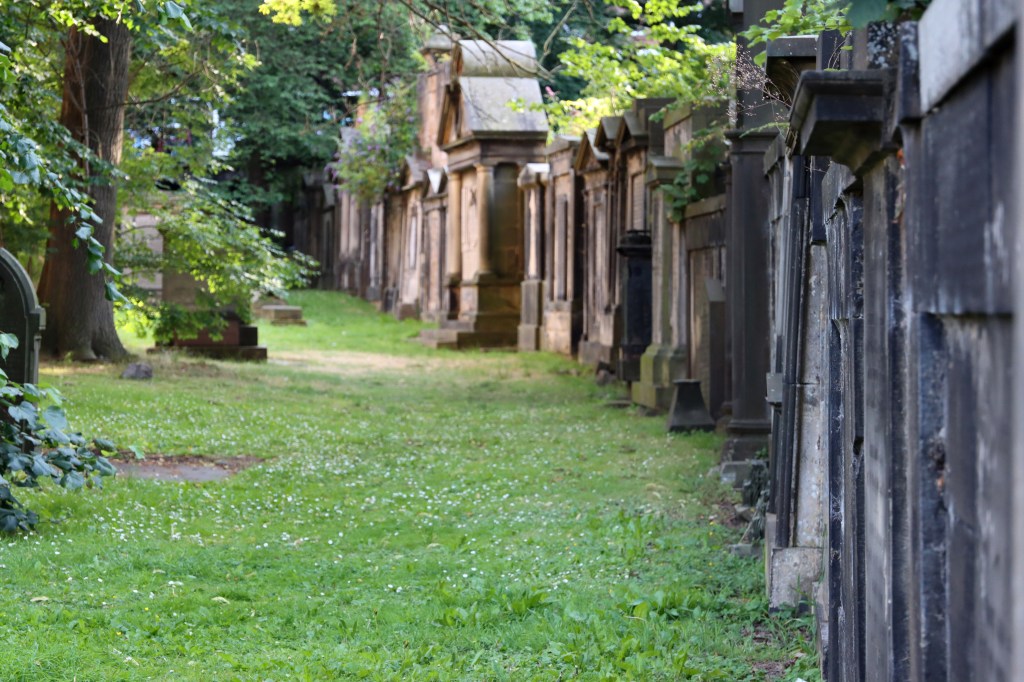
Once you explore the gardens and see the beautiful Ross Fountain, make sure you wander a bit further, pass by the playground and stop by St. Cuthbert’s Church and Graveyard, located near the junction between Princes Street and Lothian Road.
St Cuthbert’s Kirkyard is one of my favourite places because the collection of blackened gravestones, old trees swaying in the wind, crypts and dramatic views create a completely different atmosphere from the gardens.
The historic kirkyard is one of Edinburgh’s oldest Christian sites, dating back to the 7th century, and serves as the final resting place for notable figures like writer Thomas De Quincey and mathematician John Napier.
I have yet to visit the church, but it is said to have Victorian Baroque and Renaissance interior features with rare stained glass.
What’s more, it’s where my favourite writer, Agatha Christie, married her second husband in 1930.
Read More: A Short Guide to The Best Attractions Along The Royal Mile in Edinburgh
Practical Information for Visiting Princes Street Gardens
The City of Edinburgh Council manages both East and West Gardens, and the gates open at 7 am sharp. Closing times, however, shift with the seasons.
In summer, the park stays open until around 10 pm to make the most of long Scottish evenings. However, in winter, the gates close as early as 6 pm.
- Pets: Dogs are welcome but have to be on leads at all times
- Entry fee: Free entry for both East and West Gardens
- Opening hours: Open daily from 7 am; closing time varies seasonally (6 pm in winter, up to 10 pm in summer)
- Scott Monument admission: Around £10 for adults, with discounts for children and concessions
- Accessibility: Most main paths would easily suit wheelchairs and pushchairs, although some parts and access points involve steps and very steep inclines
- Toilets: Public facilities are located in both East and West Gardens
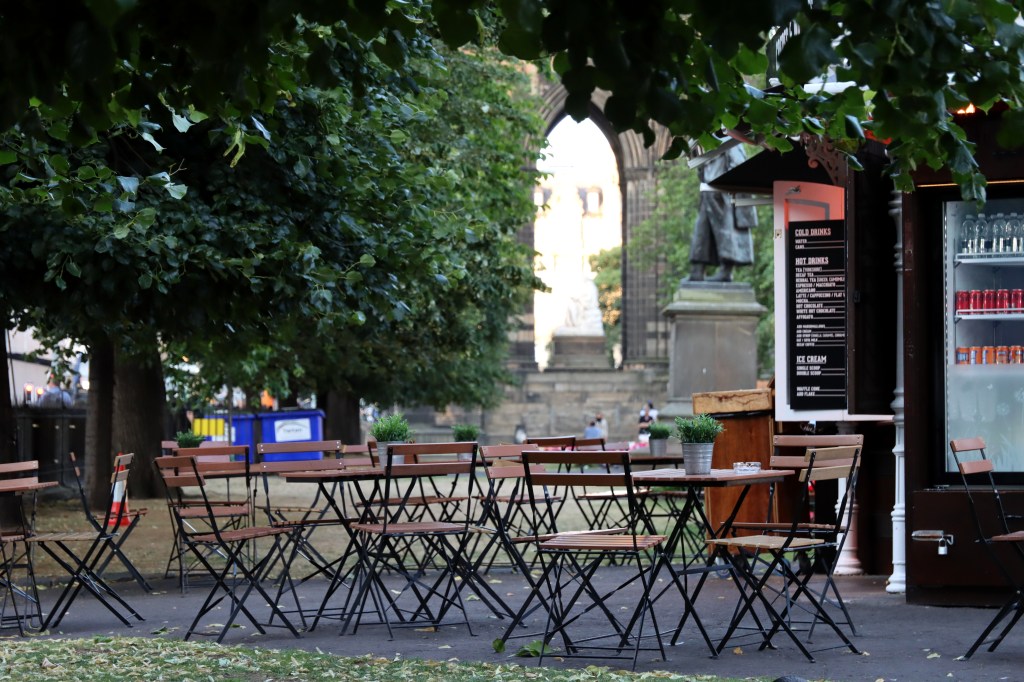
- Cafés: Sir Walter’s Café in East Gardens and a kiosk near the Ross Fountain in West Gardens
- Wi-Fi: Free public Wi-Fi available across central Edinburgh
- Closing Times: The park closes overnight for public safety
Read More: 7 Days Scotland West Coast Road Trip: Glencoe To The Isle Of Skye

Best Photo Spots in the Princes Street Gardens
Princes Street Gardens has one of the best views of Edinburgh Castle, and if you’re looking for photography ideas, these are some of my favourite spots:
- Ross Fountain: The classic frame, with the fountain in the foreground and the castle directly above
- Footbridge over the railway: Slightly elevated, unobstructed angle
- East Gardens Steps — lovely layered Edinburgh Castle views
- Cherry blossom trees (March–April): Natural pink frame around the ramparts
- The Mound path: Castle perspective shifts as you climb
- Scottish National Gallery terraces: Useful when the gardens are crowded
Read More: 10 Incredible Attractions and Places You Have to Visit In Glasgow, Scotland

Final Word
And there you have it, some of the best things to see and do in Edinburgh’s Princes Street Gardens.
As you can see, there’s lots to do from historic monuments to dramatic castle views, and seasonal highlights.
… … … … … … … … … … … … … … … … … … … … … …
Now, over to you!
Have you ever been to Princes Street Gardens? Let us know in the comments below!
Let us know if you are planning a visit to Princes Street Gardens and have travel-related questions
Subscribe For The Latest In Travel Inspiration
Subscribe to our monthly email newsletter to stay up to date with all our outdoor adventures
Enter your email below to receive updates


